.svg?q=70&width=384&auto=webp)


Why We Still Give Fruitcake at Christmas and Whether It's Worth Sending
The surprising reason fruitcake endures as a Christmas gift, plus how to tell a good one from a doorstop.
Published: Dec 08, 2025 | Modified: Aug 31, 2026
People still give fruitcake at Christmas for reasons that go back centuries: It keeps for a long time, it travels well, and it honors a tradition of sharing abundance during the holidays. And yes, a good one, made with real fruit and nuts, is worth sending.
That said, the modern fruitcake has picked up a reputation as more of a joke than something you'd actually serve. The Christmas tradition of giving one as a stocking stuffer sometimes lands with a thud, and the cake is often assumed to have the weight and consistency of a brick. In Manitou Springs, Colorado, there is an annual Fruitcake Toss competition to see who can throw one the farthest. That event has been running since 1996.
And though late-night legend Johnny Carson joked there was only one fruitcake in the world, passed around the planet every year, the truth is the Christmas cake has pleased the palates of princes and paupers alike since before the birth of Christ.
In short, a quality fruitcake tastes nothing like the dry, joke-worthy version that inspired all those punchlines. So before you write off the holiday delicacy, it's worth understanding where it came from and why it has outlasted nearly every other Christmas food.
Where Does Fruitcake Come From?
The fruitcake can be traced to ancient Egypt, where long-lasting cakes were placed in the great pyramids alongside deceased royal dignitaries to sweeten their experience in the afterlife.
A forerunner of the fruitcake fueled ancient Roman warriors, who carried a concoction of barley, pomegranate seeds, nuts, and raisins mixed with honeyed wine. The cakes, called satura, sustained them through long marches to the farthest corners of the empire.
In medieval times, European crusaders carried their own version of the fruitcake, made with bread, honey, spices, dried fruit, and mead, on their six-month treks to the Holy Land.
By the 1400s, the fruitcake's flavor had become so rich and decadent that the Catholic Church prohibited bakers from using butter for cakes during Advent, a time for fasting. This forced knights to carry a plainer cake called stollen, the German version of fruitcake, made from flour, oil, yeast, and water.
How Fruitcake Became a Christmas Tradition
It was only after a plea from a desperate, delicacy-starved Saxon prince, who wanted his family and royal associates to be able to indulge, that Pope Innocent VIII lifted the butter ban. However, anyone other than the royal family who wanted to use butter in their fruitcakes had to pay a tax, which made the dessert all the more exclusive.
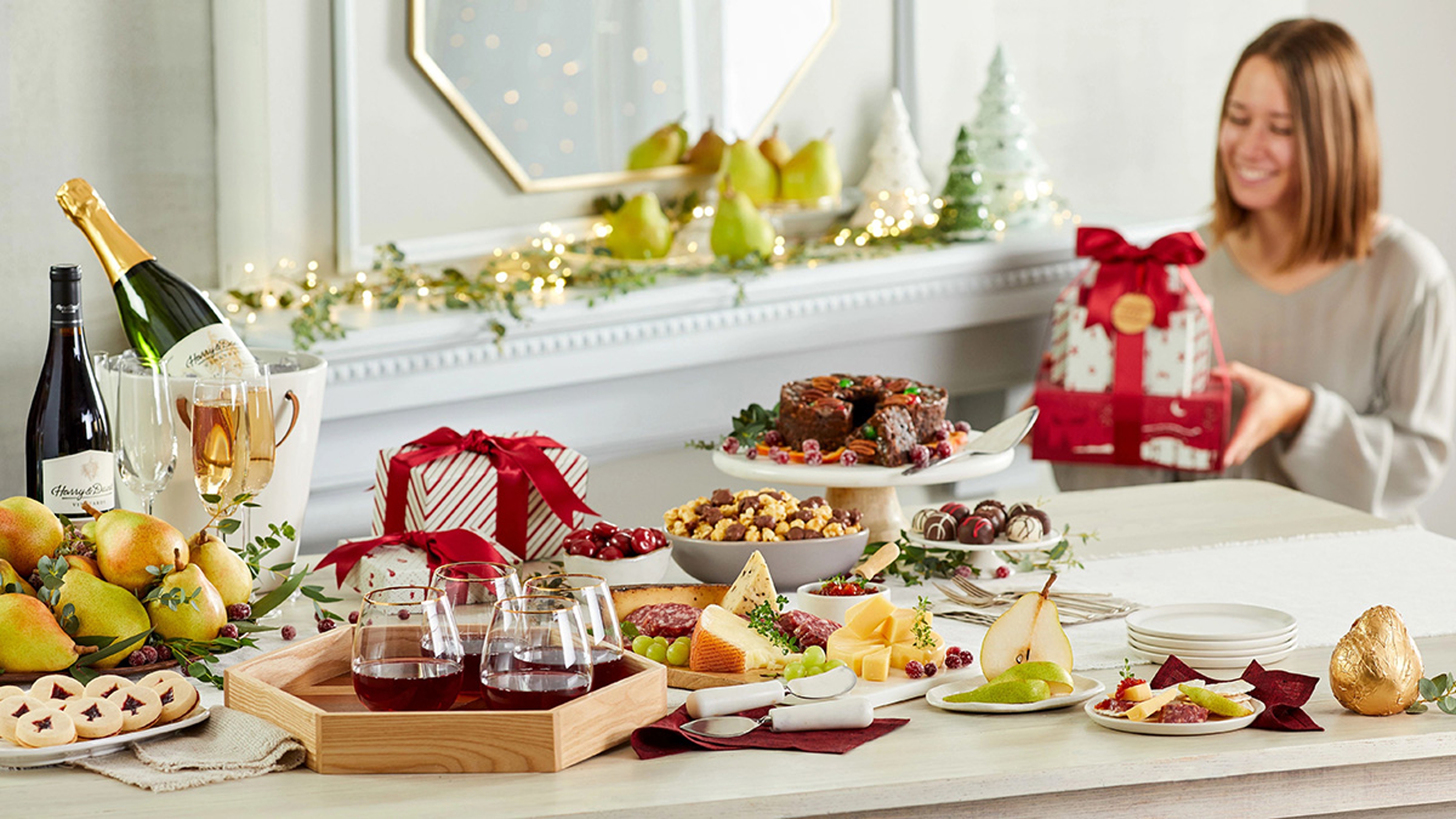
Once Europe's aristocracy took up the practice of gifting carolers and those of more modest means during the Christmas season, the fruitcake became a holiday staple. That act of sharing abundance is a big part of why we still give it today.
When British settlers came to the New World, they stocked up on the sturdy holiday staple, which they used as bread to survive the months-long trip across the Atlantic. It became even more popular once they landed on these shores.
In more recent history, fruitcake has become a perennial holiday gift, thanks to its ability to withstand mail delivery (and the punchlines from comics) without losing an ounce of flavor.
Is Fruitcake Worth Sending as a Gift?
Short answer: yes, when it's a good one. A quality fruitcake is one of the most practical and flavorful gifts you can send during the holidays, and it carries a warmth and history that few other Christmas foods match. Here's why it works so well:
- It ships and keeps well. Fruitcake was built for long journeys, from Roman marches to transatlantic crossings, so it holds up to holiday mail delivery.
- It's meant to be shared. A fruitcake is easy to slice and serve to a group, which makes it a natural fit for office parties, neighborhood get-togethers, and family tables alike.
- It carries heritage and meaning. Sending one continues a centuries-old tradition of sharing prosperity and good taste during the season.
- A good one tastes nothing like the joke. A well-made fruitcake is moist, full of real nuts and fruit, and finished with a balanced glaze, so it's far from the dry, overly boozed stereotype.
Is Fruitcake Worth Sending as a Gift?
Short answer: yes, when it's a good one. A quality fruitcake is one of the most practical and flavorful gifts you can send during the holidays, and it carries a warmth and history that few other Christmas foods match. Here's why it works so well:
- It ships and keeps well. Fruitcake was built for long journeys, from Roman marches to transatlantic crossings, so it holds up to holiday mail delivery.
- It's meant to be shared. A fruitcake is easy to slice and serve to a group, which makes it a natural fit for office parties, neighborhood get-togethers, and family tables alike.
- It carries heritage and meaning. Sending one continues a centuries-old tradition of sharing prosperity and good taste during the season.
- A good one tastes nothing like the joke. A well-made fruitcake is moist, full of real nuts and fruit, and finished with a balanced glaze, so it's far from the dry, overly boozed stereotype.
What Makes a Good Fruitcake vs. a Bad One
Not all fruitcakes are created equal, and the difference is why the dessert has such a contradictory reputation. Here's how to tell the good and the not-so-good apart:
A doorstop fruitcake | A good fruitcake |
|---|---|
Dry and dense | Moist and tender |
Artificial candied peel | Real nuts and fruit |
Over-boozed and harsh | Balanced rum notes |
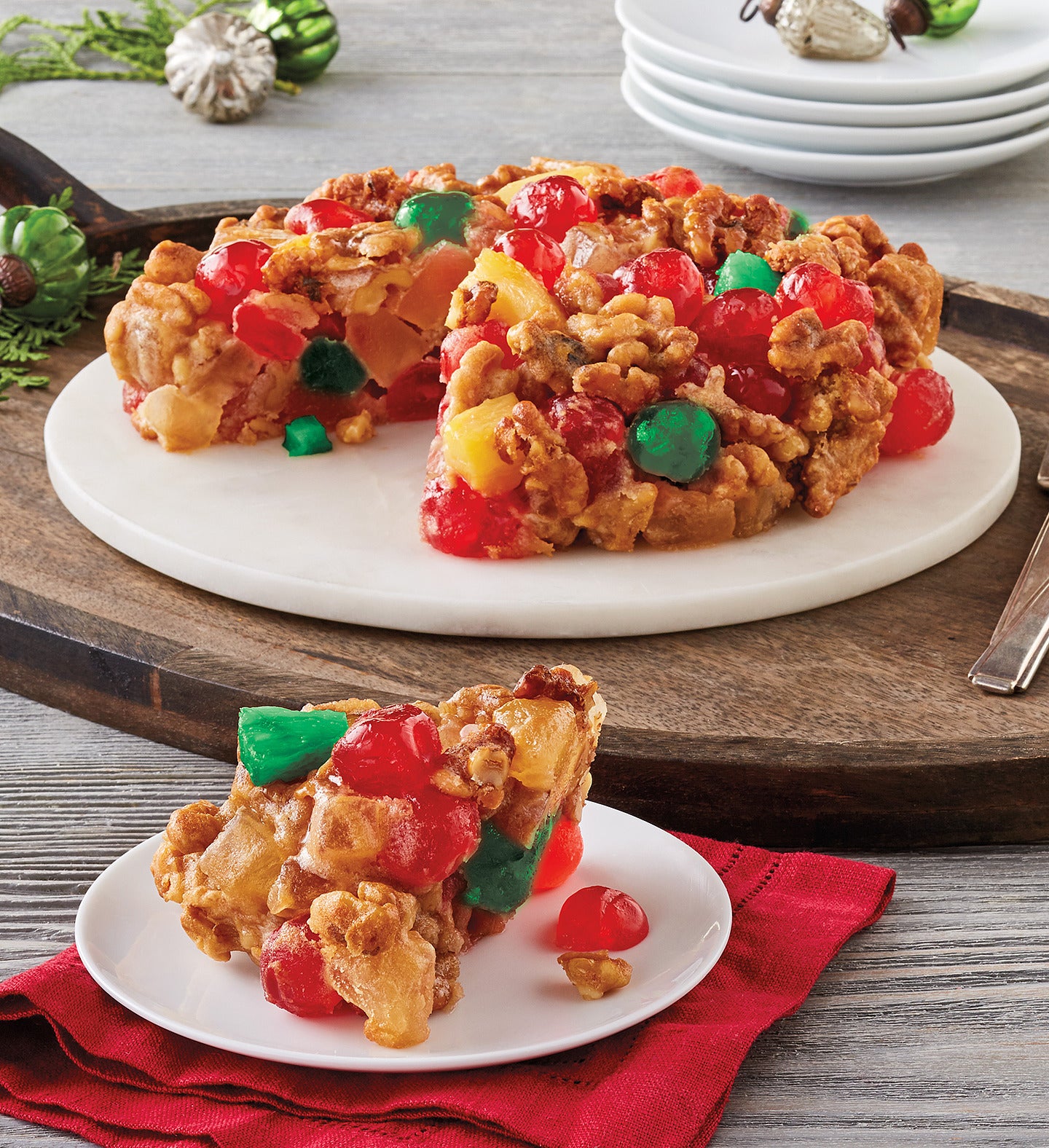
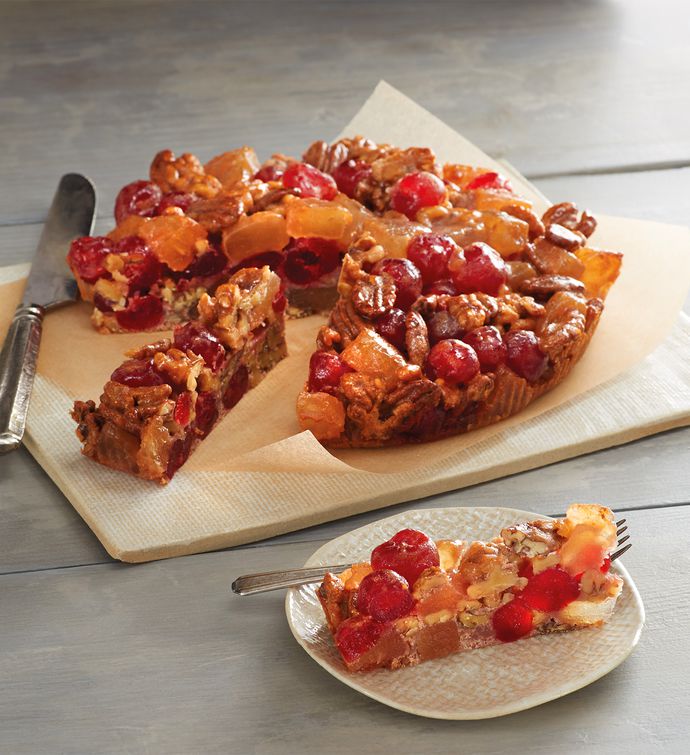
Little more than filler | An abundance of nuts, pineapple, and cherries held together with a little dough |
Sticky or dull finish | Glazed after baking for a clean, shiny finish |
That "good" column is a fair description of a Harry & David fruitcake.
Why Harry & David's Fruitcake Is Worth Sending
Way back in 1947, Harry & David created its own version of the fruitcake. This one stood out thanks to its premium fruits, nuts, and craftsmanship.
"This was our very own proprietary twist on the fruitcake," says Julie Tuter, senior merchandising manager at Harry & David. The recipe was closely guarded. Tuter says co-founder David Holmes would put paper over the bakery windows when it was being made so that no one could peek in and steal the secret recipe.
To keep the recipe secure for generations, Harry & David broke down the baking process into separate steps, so no two people knew the whole thing, says Steffanie Wolf, senior project manager at Harry & David: "First, the recipe would be handed to a mixer, and when he was done, a second mixer would make his portion of the recipe to add, and then a third mixer was brought in to complete his or her part of the process. Then the mixture would be brought to the production floor to assemble the two sizes of fruitcake confection to be baked to perfection. At the same time, a glaze formulation was brought to the mix room and a fourth mixer would create the glaze, which was then brought to the floor for another person to apply the finishing touch."
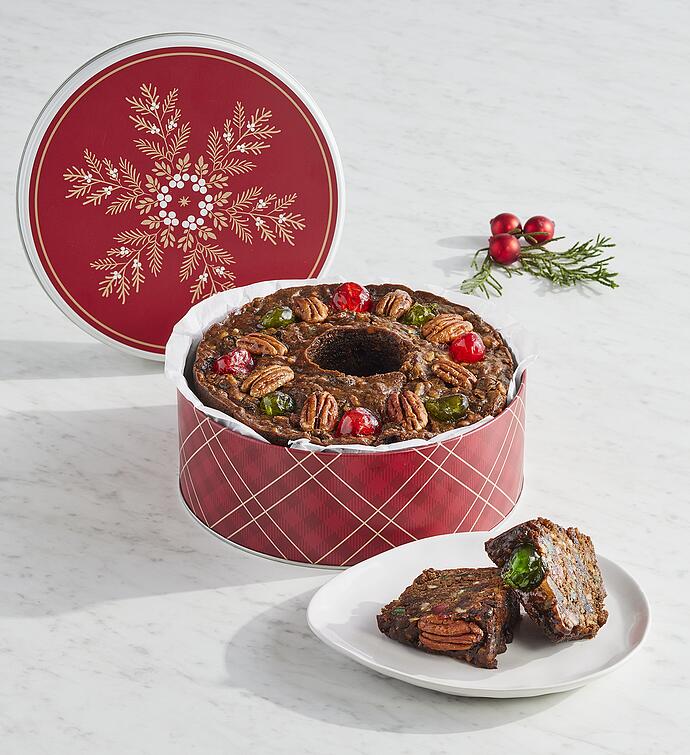
Wolf can share some of the ingredients. "It's basically a ton of nuts, pineapple, and cherries held together by a tiny bit of dough and then glazed post-baking to get its shiny appearance," she says.
Tuter adds, "It's fruitcake without the 'cake.'"
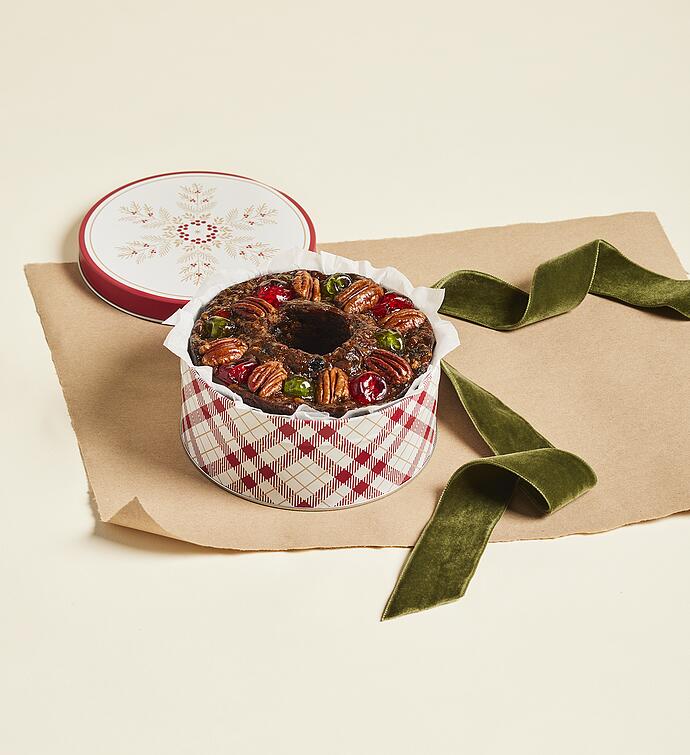
Today there are multiple versions of the Harry & David holiday fruitcake, each with its own recipe. All are moist, with a mix of nuts, dried fruit, and rum notes that alchemize into a gift friends and loved ones will be too busy savoring to laugh at.
Harry & David's traditional fruitcake is a staple in the company's popular Christmas gift baskets. A pineapple macadamia variation, carefully crafted in small batches, has become a holiday favorite in its own right.
Want to see the full lineup? Explore the Harry & David fruitcake collection, or browse the Christmas gift baskets that feature it.
Why do people give fruitcake at Christmas?
Fruitcake has been a holiday gift for centuries because it keeps for a long time, travels well, and continues a tradition of sharing abundance during the Christmas season. European aristocracy popularized gifting it to carolers and neighbors, and the custom stuck.
Is fruitcake a good gift?
A quality fruitcake makes a thoughtful gift. It ships and stores well, it's easy to serve to a group, and a well-made version is moist and full of real nuts and fruit.
How long does fruitcake last?
Fruitcake is known for its long shelf life, which is one reason it became a mail-order holiday staple. Store it in a cool, dry place and follow the packaging for best-by guidance.
Where does fruitcake come from?
Fruitcake traces back to ancient Egypt, where long-lasting cakes were placed in the pyramids. Versions followed with Roman soldiers, medieval crusaders, and eventually European aristocracy, who turned it into the Christmas gift we know today.
AUTHOR

Mike Hammer is a veteran journalist and editor whose byline has appeared in a broad landscape of top media outlets including Rolling Stone, USA Today, Maxim, Spin.com, Adweek and the New York Daily News.