

The Evolution of the Christmas Cake
Grab yourself a slice of the holiday season — no matter which version you prefer.
Published: Dec 08, 2025 | Modified: Nov 02, 2026
Traditional Christmas cakes include England's fruitcake, Italy's panettone, Germany's stollen, and the French Bûche de Noël, plus an American version made with bright red and green candied fruits. They range from a dense fruitcake to a dome-shaped fruit cake to a chocolate cream sponge made to resemble a Yule log. Below, we compare them side by side and trace how the Christmas cake took shape.
Known for its grand meals and mountains of leftovers, the holiday season can feel like one never-ending feast. Thanksgiving, with its turkey, stuffing, gravy, and parade of endless side dishes, is certainly the main course. Christmas, despite being synonymous with ham, seems more focused on dessert, with its sugar cookies, gingerbread, eggnog, peppermint, and traditional Christmas cake, a dense and delectable treat with humble origins in medieval Europe.
In 14th-century England, Christmas cake began as "plum pudding" or “pottage,” a hearty, warm porridge of grains, dried fruits, and meat consumed on Christmas Eve after a month-long Advent fast from rich foods. During the 1600s, families began to add traditional cake ingredients, such as eggs, butter, and wheat flour to their pottage, resulting in a denser, more dessert-like end product.
READ MORE: Fruitcake: The Dessert That's More Punchline Than Delicacy
Increased trade in the 1700s saw the English work exotic sugars, dried raisins, currants, and new spices like cinnamon, cloves, and nutmeg into their recipes. The addition of suet, a raw fat derived from cattle or sheep, incorporated the savory, further transforming the once-modest plum porridge into an indulgence well fit for a season associated with abundance and celebration.

During the 18th century, brandy became a standard Christmas cake ingredient. Tradition found families baking a cake weeks before the holiday, then occasionally “feeding” it with more drink to enhance its flavors as it aged. With an eventual marzipan glaze and blanket of royal icing, the decadent fruitcake remained edible throughout winter thanks to its alcohol and high sugar content.
Modern spinoffs include an American version with bright red and green candied fruits and Italy’s panettone, a dome-shaped fruit cake with lemon and vanilla. Germany’s stollen features currants, cardamom, and powdered sugar, while the Bûche de Noël, or Yule log, is a chocolate cream sponge cake made to resemble the good luck log burned by the French on Christmas Eve.
READ MORE: The Bûche de Noël: A Christmas Cake From France With an American Twist
Certain flavors in holiday treats — ones that convey a sensation of temperature — have become synonymous with a “holiday aroma.” Cinnamon and nutmeg offer a warm, spiced depth reminiscent of the fireside, whereas the fresh, cool bite of peppermint suggests frigid winter nights. Orange zest and ginger are doubly effective, conveying both the zing of chilly winds and radiance from the hearth.
Types of Traditional Christmas Cakes at a Glance
These cakes share a place on the holiday table, but they come from different places and take different forms. Here's how they compare.
- Plum Pudding, the early form (14th-century England): A hearty, warm porridge of grains, dried fruits, and meat eaten on Christmas Eve after a month-long Advent fast
- English Christmas Fruitcake (England): A dense cake with raisins, currants, and spices like cinnamon, cloves, and nutmeg, made with brandy and finished with marzipan and royal icing
- American Fruitcake (United States): A fruitcake made with bright red and green candied fruits
- Panettone (Italy): A dome-shaped fruit cake with lemon and vanilla
- Stollen (Germany): A fruit cake featuring currants, cardamom, and powdered sugar
- Bûche de Noël (France): A chocolate cream sponge cake made to resemble the good luck log burned on Christmas Eve
Several of these appear in our favorites below, including the Bûche de Noël and the Classic Traditional Fruitcake.
Our favorite Christmas cakes
Our favorites below follow the traditions above. The Bûche de Noël is our take on the French classic, and the Classic Traditional Fruitcake is our fruitcake. The Peppermint Bark Christmas Cake, Signature Cinnamon Swirl, and Holiday Loaf Cakes bring in the peppermint, cinnamon, and seasonal flavors of the holiday aroma.
Peppermint Bark Christmas Cake

Peppermint Bark Christmas Cake
Shop : Peppermint Cake from Harry & David
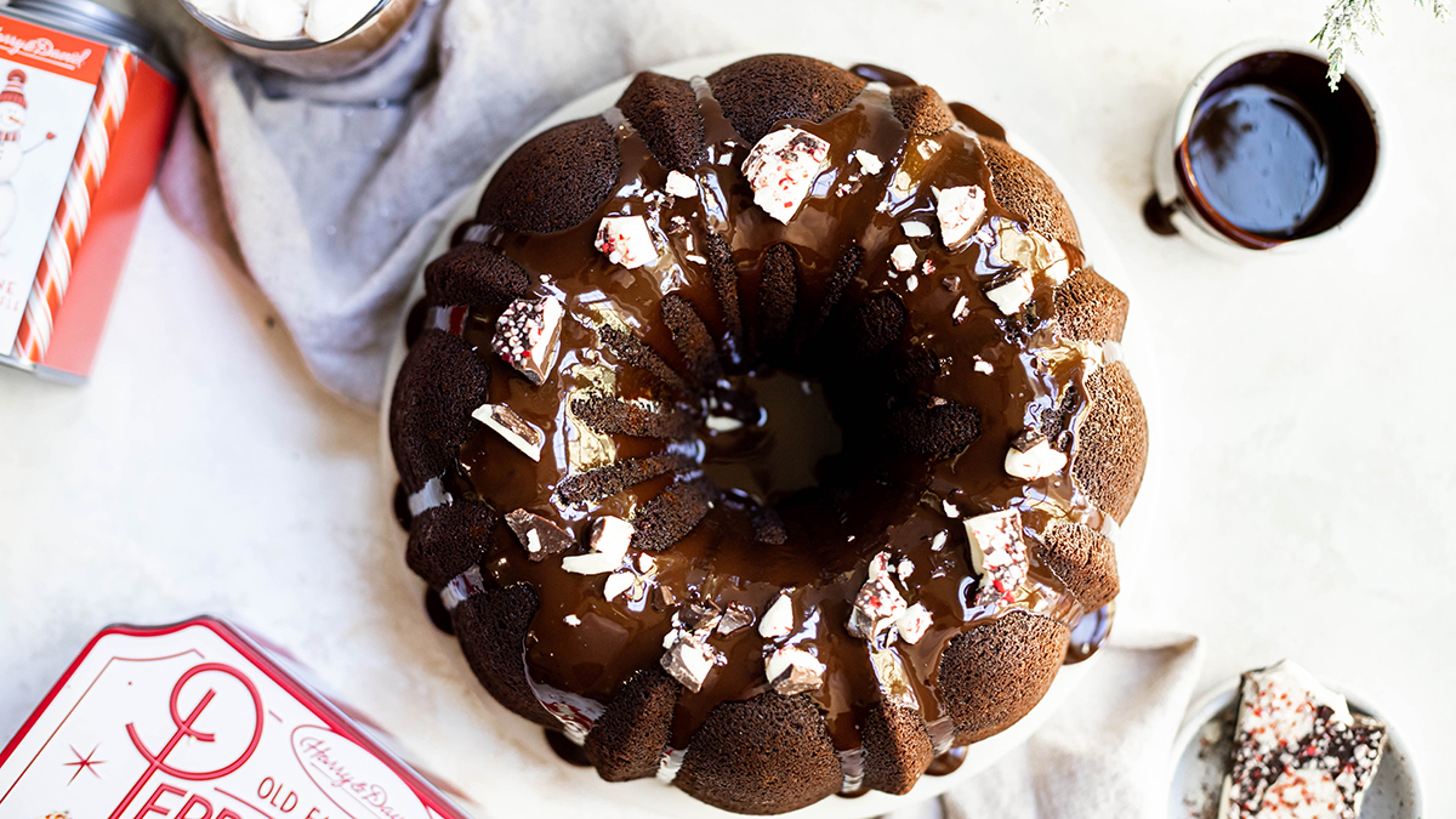
This winter dream features luscious peppermint buttercream all around and in between thick chocolate and fluffy white cake layers. Generous sprinklings of crushed peppermint, white chocolate swirls, and milk chocolate shavings ice the deal.
Shop : Peppermint Cake from Harry & David
Signature Cinnamon Swirl

Signature Cinnamon Swirl
Shop : Classic Cinnamon Swirl Duo from Harry & David
One of our bakery’s original pastries, the hand-rolled Signature Cinnamon Swirl carries unique touches, such as applesauce-glazed nuts, apple-infused cinnamon sugar filling, and a generous brushing of clarified butter just before it enters the oven. Consider enjoying this one on the morning of Dec. 25 with a tall mug of Christmas coffee.
Shop : Classic Cinnamon Swirl Duo from Harry & David
Bûche de Noël

Bûche de Noël
Shop : Bûche de Noël from Harry & David
Baked and shaped to resemble a Yule log, the Harry & David take on this traditional French dessert offers moist chocolate sheet cake interlayered with sweet coffee cream filling, served as a roulade finished with thick fudge frosting.
Shop : Bûche de Noël from Harry & David
Holiday Loaf Cakes

Holiday Loaf Cakes
Shop : Holiday Loaf Cakes from Harry & David
A holiday brunch standby, these moist mini-loaves are baked in house, each infused with iconic flavors of the season. Variety offerings include sweet apple streusel, marbled chocolate swirl, pumpkin spice, and cranberry orange flecked with fruit.
Shop : Holiday Loaf Cakes from Harry & David
Classic Traditional Fruitcake

Classic Traditional Fruitcake
Shop : Classic Traditional Fruitcake from Harry & David
This holiday, we’re serving up our beloved Southern Oregon fruitcake in all its rich, festive glory. It’s packed with pineapple, raisins, walnuts, pecans, and bright glacé cherries, all wrapped in warm notes of cinnamon, cloves, allspice, vanilla, and ginger. Enjoy it sliced, warmed, or shared straight from its tin.
Shop : Classic Traditional Fruitcake from Harry & David



What is traditional Christmas cake made of?
Traditional Christmas cake is a dense fruitcake. English bakers built it from eggs, butter, and wheat flour, then added raisins, currants, and spices like cinnamon, cloves, and nutmeg. By the 18th century, brandy had become a standard ingredient, and many cakes were finished with marzipan and royal icing.
How is panettone different from stollen?
Panettone is a dome-shaped fruit cake from Italy flavored with lemon and vanilla. Stollen comes from Germany and features currants, cardamom, and powdered sugar. Both are modern spinoffs of the English Christmas cake.
What is a Bûche de Noël?
It's a chocolate cream sponge cake made to look like a Yule log, inspired by the good luck log the French burned on Christmas Eve. Our version layers moist chocolate sheet cake with sweet coffee cream filling and finishes it with thick fudge frosting.
Where did Christmas cake come from?
It began in 14th-century England as plum pudding, or pottage, a warm porridge of grains, dried fruits, and meat eaten on Christmas Eve after a month-long Advent fast. In the 1600s, families added eggs, butter, and flour, which made it denser and more like a dessert.
Why did Christmas cake last through the winter?
Alcohol and a high sugar content kept it edible. Families often baked it weeks before the holiday and occasionally "fed" it with more drink as it aged.
Which Harry & David cakes are in this guide?
We feature the Peppermint Bark Christmas Cake, Signature Cinnamon Swirl, Bûche de Noël, Holiday Loaf Cakes, and Classic Traditional Fruitcake. The Classic Traditional Fruitcake is our Southern Oregon fruitcake, packed with pineapple, raisins, walnuts, pecans, and glacé cherries.
AUTHOR

A former arts and culture writer for Harrisburg, Pennsylvania's Pulitzer Prize-winning Patriot News, Jonathan Rowe is a New York-based feature writer for SPIN, Men's Fitness, and WONDERLUST travel. He has crafted original content and news for Sony Music, Live Nation, Spotify, and ESPN, and works as a songwriter in conjunction with multiple Grammy winners.